Financing Heavy-Duty Forklifts for 2026: A Guide for 3PL Managers
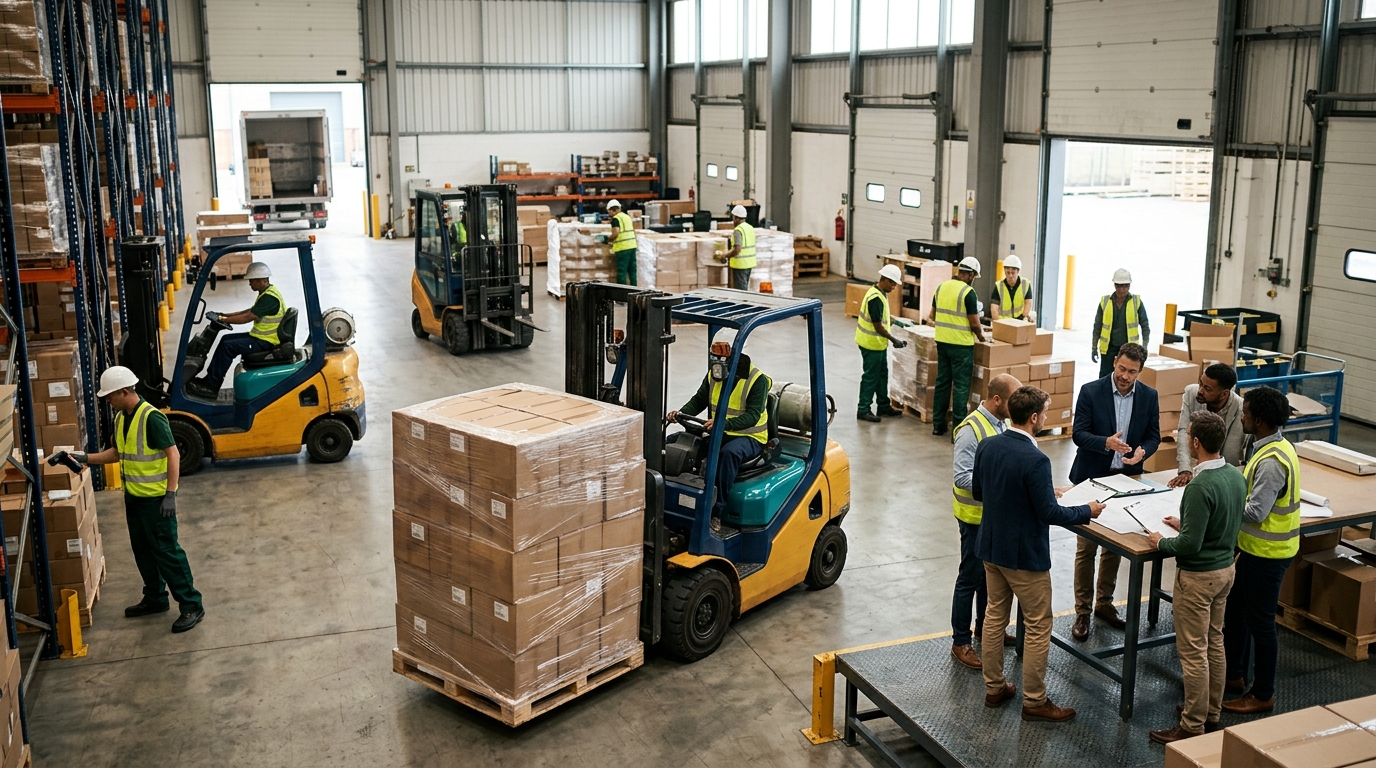
How can I secure financing for heavy-duty forklifts in 2026? You can secure financing for heavy-duty forklifts by obtaining a dedicated equipment loan or lease from a specialty lender, provided you hold a minimum credit score of 650 and possess at least two years of operational history. Click here to check your current eligibility and see if you qualify for 2026 rates. Financing this specific category of machinery requires understanding that forklifts are considered 'hard assets,' which makes them highly collateralized and easier to finance than software or working capital. In 2026, the logistics equipment financing rates 2026 depend heavily on the age of the equipment. New units generally qualify for interest rates between 6.5% and 9.5%, while used units often see rates ranging from 10% to 14%. When you apply, lenders will look for your Debt Service Coverage Ratio (DSCR), typically requiring a minimum of 1.25x. If your business has a high volume of current contracts, you can use these to demonstrate steady cash flow to lower your interest burden. If you are specifically looking for warehouse automation funding to pair with your lift truck procurement, mention this to the underwriter, as combined technology packages often receive priority approval due to the increased efficiency metrics they bring to your facility.
How to qualify
- Maintain a minimum credit score of 650: Lenders in the 3PL sector utilize both personal credit for owner-operators and business credit for the firm. A score of 650 is the baseline, but scores above 700 unlock the best logistics equipment financing rates 2026.
- Provide three years of financial records: You must supply profit and loss statements, balance sheets, and tax returns. Lenders look for consistent revenue growth. If your 3PL saw a revenue dip during the 2024-2025 cycle, be prepared to explain the market factors involved.
- Demonstrate 1.25x Debt Service Coverage Ratio (DSCR): Divide your annual net operating income by your total annual debt obligations. If the result is below 1.25, you will likely need a larger down payment, usually 20% instead of the standard 10%.
- Provide equipment specifications: Have the make, model, year, and serial number of the forklifts you intend to purchase. Lenders will perform a UCC-1 filing on the asset; they need to know the specific asset value to determine the loan-to-value ratio.
- Bank statements for the last six months: Lenders analyze these to ensure you aren't living on your line of credit. They want to see that your day-to-day operations generate positive cash flow without needing constant external infusions.
- Clear business plan for expansion: If you are using these forklifts for a new facility or expanded capacity, provide a brief summary of the new client contracts that justify the purchase. This shows the lender you aren't just buying gear, you are building capacity.
Comparing Financing Options
| Financing Type | Best For | Typical Term | Down Payment |
|---|---|---|---|
| Equipment Loan | Owning assets outright | 3-7 years | 10-20% |
| Capital Lease | Tax depreciation benefits | 3-5 years | 0-10% |
| Operating Lease | Low monthly payments | 2-4 years | $0 |
Choosing the right path depends on your tax strategy. If you need to lower your taxable income, an equipment loan allows you to deduct interest and take advantage of Section 179 depreciation. If your primary goal is to keep monthly cash flow high for other operational needs, an operating lease allows you to return the forklift at the end of the term, though you won't own it. For those managing a large fleet, a capital lease is often the sweet spot as it mirrors an ownership model with structured monthly payments that include potential buyout options at the end of the term. Always check our payment-calculator to see how different interest rates affect your monthly obligations before signing any master lease agreement.
What is the difference between an equipment loan and a lease for a 3PL? An equipment loan transfers ownership to you, allowing for depreciation benefits, whereas a lease functions more like a rental agreement with a buyout option at the end.
Do logistics businesses qualify for SBA loans for equipment? Yes, the SBA 7(a) and 504 loan programs provide excellent financing for heavy-duty forklifts, especially when the purchase is tied to a larger facility expansion or warehouse construction project.
Understanding Logistics Equipment Financing
Financing heavy-duty forklifts is a critical component of warehouse management. As the industry shifts toward 24/7 operations, equipment uptime is paramount. When you choose to use equipment-financing, you are protecting your working capital. According to the U.S. Small Business Administration (https://www.sba.gov), small businesses that utilize asset-based financing retain higher cash reserves, which helps during supply chain volatility. Furthermore, as of 2026, FRED (https://fred.stlouisfed.org) indicates that capital expenditure in the transportation and warehousing sector remains robust, suggesting that lenders are actively seeking to finance high-performing 3PL operations. Understanding the mechanics involves realizing that lenders are buying the forklift, not just giving you money. If you default, they take the truck. This makes it easier for startups with limited history to get funded, as the asset itself acts as a strong guarantee. When planning for the next three years, consider how your fleet maintenance schedule interacts with your debt service. If you are financing a used unit, ensure the term of the loan does not exceed the remaining useful life of the machine, as this will lead to a 'negative equity' situation that complicates future refinancing efforts.
Bottom line
Securing financing for your warehouse equipment in 2026 is about aligning your debt structure with your growth pace. Reach out to our partner network today to compare your financing options and keep your warehouse running at peak efficiency.
Disclosures
This content is for educational purposes only and is not financial advice. 3pl.news may receive compensation from partner lenders, which may influence which products are featured. Rates, terms, and availability vary by lender and applicant qualifications.
Ready to check your rate?
Pre-qualifying takes 2 minutes and won't affect your credit score.
See if you qualify →Frequently asked questions
What is the typical interest rate for 3PL forklift financing in 2026?
For prime borrowers, rates generally sit between 6.5% and 9.5% for new equipment, while used equipment financing often ranges from 10% to 14% depending on age.
Can I use an SBA loan for warehouse equipment?
Yes, SBA 7(a) loans are frequently used for equipment purchases, particularly for 3PL businesses that are scaling operations or buying into new warehouse space.
What documents are required to apply for a 3PL equipment loan?
Lenders typically require three years of tax returns, current balance sheets, profit and loss statements, and six months of recent business bank statements.
Is it better to lease or buy forklifts for a warehouse?
Leasing is better for cash flow and keeping technology current, while buying (financing) is better for tax depreciation benefits and long-term asset ownership.