Funding Warehouse Automation and Robotics: A 2026 Strategy Guide
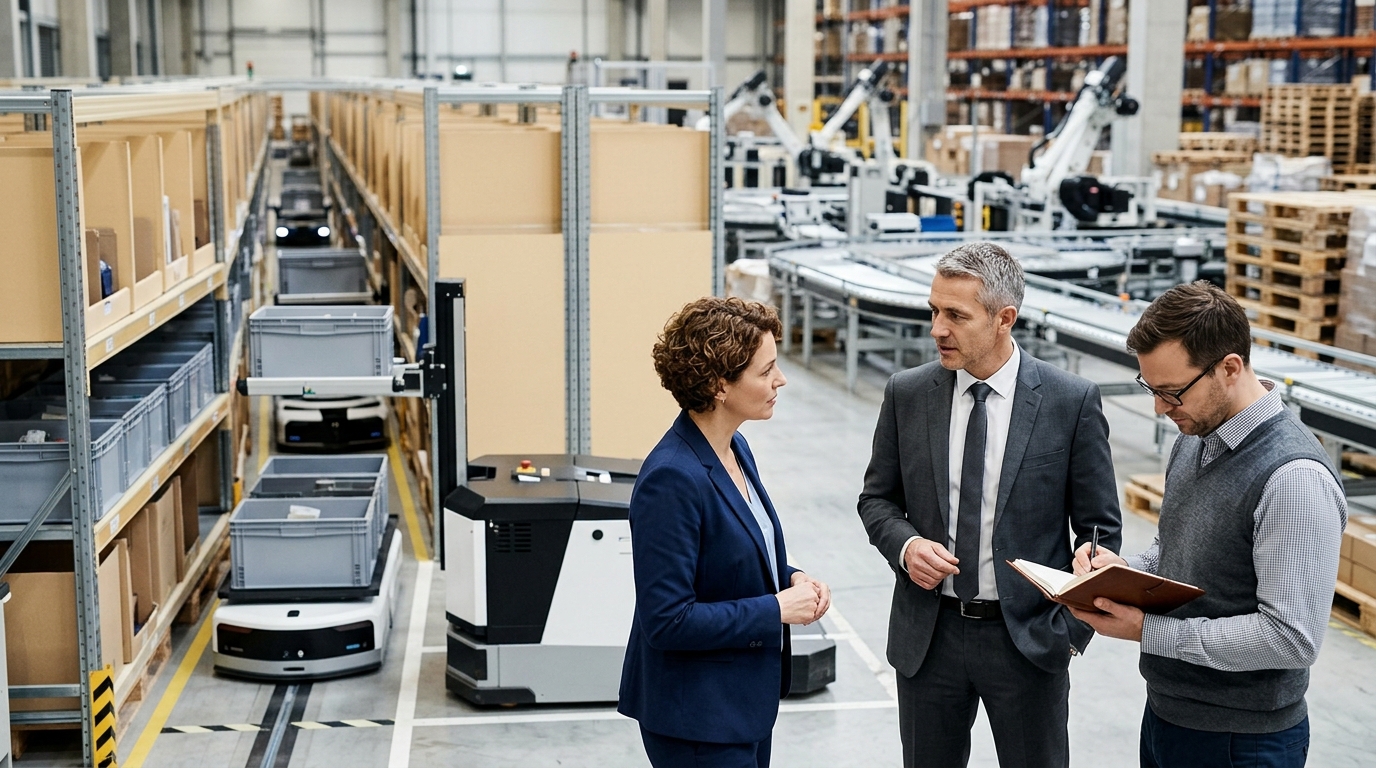
How can I secure warehouse automation funding today?
You can finance warehouse automation projects by utilizing equipment-specific term loans or asset-based lending once you demonstrate at least two years of profitable operation and a 650+ credit score. Check your eligibility and rates to begin your application process immediately.
In 2026, the market for warehouse automation funding is primarily driven by the need for increased throughput and labor efficiency. When you approach a lender for funding, you are not just asking for money to buy machinery; you are selling them on the efficiency of your operation. Lenders looking at the 2026 market are scrutinizing "smart warehouse" transitions. If you are integrating Autonomous Mobile Robots (AMRs) or automated picking systems, you must present a clear ROI projection showing labor savings of at least 15-20% per shift.
Most lenders providing funding for these projects will require a firm quote from the automation vendor and a detailed breakdown of integration costs. Unlike standard equipment financing, automation funding often allows you to roll soft costs—such as software licensing, system integration, and on-site implementation labor—into the primary capital expenditure. This is a critical distinction because it prevents you from having to tap into your operational cash reserves for project-related consulting fees.
Expect to put down 10-20% of the total project cost, though established firms with strong cash flow and multi-year contracts with reputable retailers may negotiate this requirement down. The market for logistics equipment financing rates 2026 is currently competitive, with terms typically spanning three to seven years, depending on the expected useful life of the robotics. Before submitting your application, ensure your balance sheet reflects current depreciation schedules. Showing an accurate, clean picture of your existing debt-to-equity ratio will stop the underwriter from flagging your request as high-risk.
How to qualify
Qualifying for warehouse automation funding or broader supply chain expansion loans requires strict adherence to institutional underwriting standards. Here are the concrete requirements you need to meet to secure capital in 2026.
Time in Business: Traditional lenders and banks demand at least 24 months of continuous, verified operations. If you are a startup, you will likely be disqualified from low-interest term loans and forced into high-cost merchant cash advances. Ensure you have two full years of tax returns ready to prove this longevity.
Credit Score Thresholds: For bank-grade financing, aim for a FICO score of 680 or higher. If your score sits between 620 and 670, you are still eligible for many commercial equipment loans, but you may need to provide additional collateral. This could be in the form of unencumbered racking systems, heavy-duty forklifts, or other liquidable assets to secure the loan.
Revenue and DSCR: Lenders assess your Debt Service Coverage Ratio (DSCR). A ratio of 1.25x or higher is the standard benchmark for approval. This means for every $1.00 you owe in debt payments, you must generate $1.25 in net operating income. Prepare your YTD profit and loss statements and two years of business tax returns to calculate this.
Asset Valuation: If you are buying heavy-duty forklifts or racking, provide a detailed invoice from the vendor. If the equipment is used, the lender will likely require an independent appraisal to determine the loan-to-value (LTV) ratio. Most lenders will cap the loan amount at 80% of the appraised value.
Business Plan & ROI: You need a one-page summary detailing how the new technology impacts your throughput. If you cannot explain how the equipment reduces cost per pick, the lender will likely view the loan as speculative.
Application Package: Keep your EIN, Articles of Incorporation, and a schedule of existing business debts (SOED) in a centralized digital folder. Lenders can process these files in 48-72 hours if they do not have to chase you for missing documents.
Choosing your financing path
When evaluating your options, you must choose between term loans, equipment leases, and lines of credit. This decision determines both your immediate cash flow and your long-term ownership of the assets.
| Option | Best Used For | Pros | Cons |
|---|---|---|---|
| Term Loan | High-value, long-life assets like warehouse buildings or large-scale conveyor systems. | You own the asset; tax advantages via Section 179 depreciation. | Higher initial down payment; stricter credit requirements. |
| Equipment Lease | Technology prone to obsolescence, like robotics, sensors, and software-heavy automation. | Lower monthly payments; easier to upgrade tech every 3-5 years. | You may not own the asset at the end; higher total cost over time. |
| Business Line of Credit | Short-term working capital for logistics startups and seasonal inventory spikes. | Highly flexible; draw only what you need; interest paid on used amount. | Variable interest rates; typically requires high credit scores for low rates. |
If you prioritize rapid technological iteration—where robots or software might be outdated in 3-5 years—leasing is safer. It allows you to "refresh" the technology without having to sell off depreciated assets. However, if the assets have a 10+ year lifespan, such as heavy-duty structural racking or permanent mezzanine builds, a traditional term loan is almost always more cost-effective over the life of the asset because you capture the full depreciation benefit.
What are current logistics equipment financing rates 2026? Interest rates for high-quality borrowers in 2026 currently sit between 6.5% and 9.5% for equipment-backed loans. These rates are secured against the specific value of the asset, which mitigates the risk for the lender. If your credit profile is in the "average" range, or if you are seeking an unsecured business line of credit, you should expect rates to climb to 14% or higher. Always shop at least three lenders simultaneously to compare the total cost of capital, not just the APR. Hidden fees, such as origination fees or documentation surcharges, can inflate the real cost of the loan by 1-2 percentage points.
How does asset-based lending for 3PL companies function in practice? Asset-based lending (ABL) is fundamentally different from cash-flow lending because it focuses on your balance sheet assets rather than your P&L statement. For a 3PL firm, this means your fleet of delivery vehicles, heavy-duty forklifts, and even your racking systems serve as the primary security for the loan. If your business experiences a seasonal dip in revenue, the lender is protected by the liquidation value of these assets. This makes ABL particularly effective for 3PLs that have high capital expenditure requirements but fluctuating monthly revenue. It provides a revolving credit line that grows as you add more assets to your facility, allowing for a scalable supply chain expansion loan strategy.
Understanding the financing landscape
To understand how to fund your operation, you must recognize that 3PL financing is distinct from standard commercial lending. Warehouse operations rely heavily on “hard assets”—equipment that has a clear, secondary market value. This is why warehouse construction loans 2026 and fleet financing are often easier to secure than unsecured lines of credit. When a lender knows they can repossess a reach truck or a racking system and sell it at an auction to recover their capital, they are significantly more willing to approve your loan application.
According to the Small Business Administration (SBA), capital access is the primary growth barrier for small-to-mid-sized warehousing and transportation firms, with over 40% of applicants citing documentation gaps as the primary reason for initial denial (source: SBA.gov). You must treat your financing application like a formal business case. When you apply for logistics software integration loans or heavy equipment financing, the underwriter is essentially performing a risk assessment on your warehouse’s ability to survive for the next decade.
Furthermore, the cost of capital in the logistics sector is increasingly tied to the asset's utility. As noted by the Federal Reserve Bank of St. Louis, commercial industrial production indices for logistics equipment have remained steady, but the demand for automation-specific financing has spiked by nearly 12% as of early 2026 (source: FRED). This means lenders are becoming more comfortable with the collateral value of robotics. Ten years ago, a lender might have hesitated to finance a fleet of AMRs because they had no idea what the resale value of a robot was. Today, there is an established secondary market, which makes the financing process smoother for you.
When looking for the best 3PL fleet financing companies, prioritize those that understand the logistics industry lifecycle. A generalist bank may not understand why a forklift needs to be financed over five years, but a specialized logistics lender will know exactly what the depreciation curve looks like. This expertise saves you time during underwriting. By focusing on specialized lenders, you avoid the frustration of explaining basic operational metrics to a loan officer who has never set foot in a distribution center.
Bottom line
Securing financing in 2026 requires a disciplined approach to asset documentation and a clear strategy for your ROI. If you have your financials in order, you are well-positioned to capitalize on the current market and grow your operation. Use the resources available to compare your options, finalize your documents, and apply for the capital you need.
Disclosures
This content is for educational purposes only and is not financial advice. 3pl.news may receive compensation from partner lenders, which may influence which products are featured. Rates, terms, and availability vary by lender and applicant qualifications.
Ready to check your rate?
Pre-qualifying takes 2 minutes and won't affect your credit score.
See if you qualify →Frequently asked questions
What are current logistics equipment financing rates 2026?
For prime borrowers in 2026, equipment-backed loans generally range from 6.5% to 9.5%. Higher-risk profiles may see rates up to 14%.
How much down payment is required for warehouse automation funding?
Most lenders require a 10% to 20% down payment. Well-established firms with strong cash flow may occasionally negotiate this to zero.
Can I use SBA loans for logistics businesses?
Yes, SBA 7(a) and 504 loans are frequently used for purchasing warehouse real estate, heavy-duty machinery, or fleet vehicles.
Is asset-based lending a good fit for 3PLs?
It is ideal for 3PLs with significant existing capital assets, like racking or fleet vehicles, which act as collateral for a revolving line of credit.