Funding a TMS migration in 2026 — the payback math for a mid-sized brokerage
A modern TMS migration runs $200K–$500K all-in for a mid-sized 3PL but pays back 1–3% margin on revenue. Here's the financing stack that keeps the project from eating your load-funding cash.
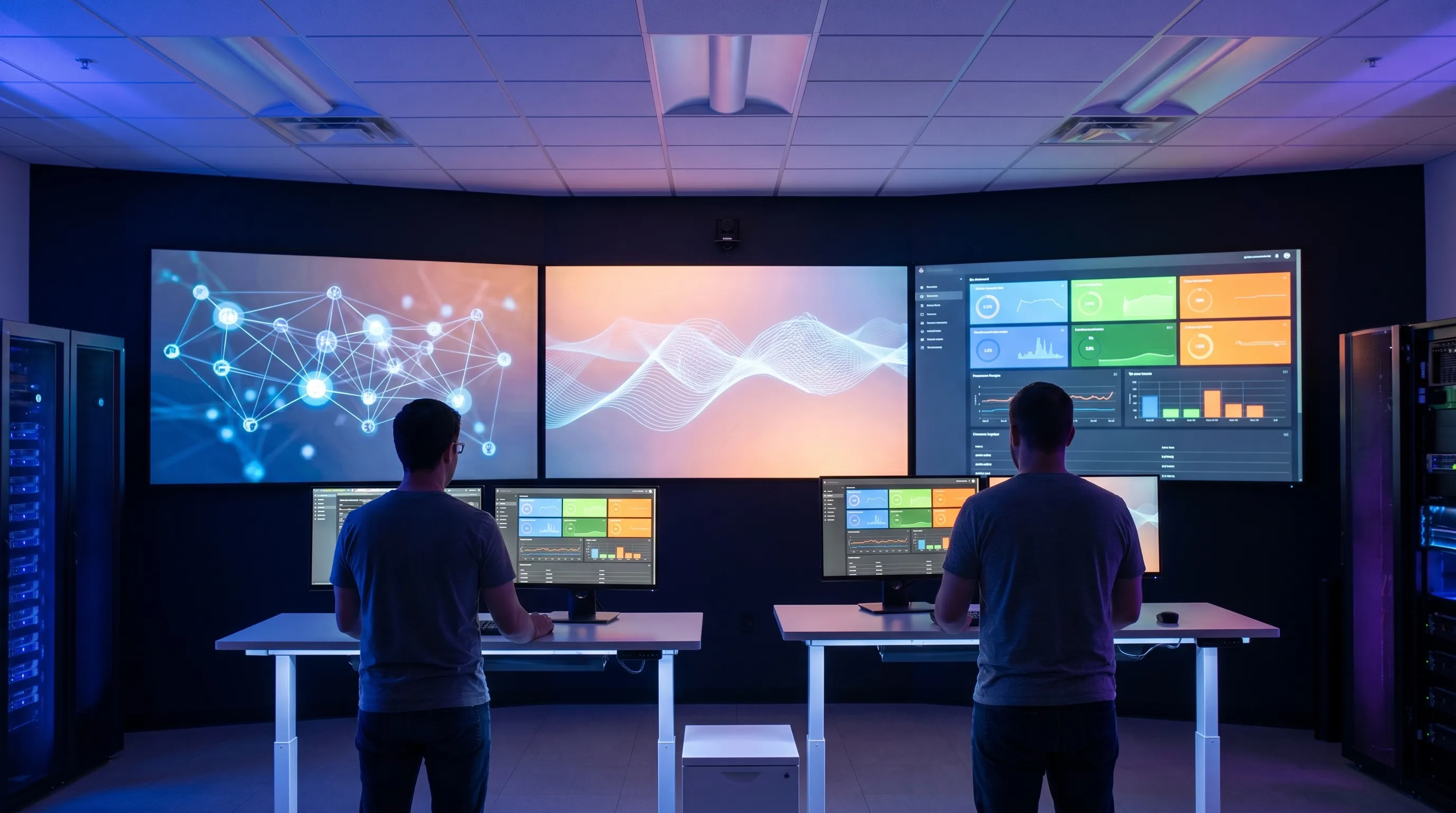
The TMS migration conversation a mid-sized brokerage has in 2026 is structurally different from the one they had in 2022. The implementation that used to be a two-year project — McLeod LoadMaster, MercuryGate, Trimble TMW, Revenova, Tai Software, the rest of the modern cloud-TMS bench — now lands in 6 to 16 weeks at most reasonable implementation partners. That compression changed the project from “we’ll get to it next year” to “we should have already started.” It also concentrated the capital outlay into a much tighter window, which is the part most brokerage operators are still under-budgeting.
The 2026 TMS migration for a $30M-revenue brokerage isn’t a $50K decision. It’s a $200K to $500K all-in capital outlay, with a payback math that justifies the spend cleanly — if the brokerage funds the project correctly and doesn’t pull the cash out of the load-funding account to do it.
The actual cost stack on a 2026 implementation
The number every TMS vendor leads with is the per-user monthly license — typically $30 to $150 per user per month depending on platform and tier. For a 40-user brokerage, that’s $14K to $72K a year in run-rate license, and it’s the cheap part of the project. The capital outlay that bites is everywhere else on the bill.
Real all-in cost on a 2026 implementation for a mid-sized brokerage:
- Implementation services: $50K to $250K depending on vendor and project scope. The discovery, configuration, training, and go-live support that the implementation partner runs. Variable based on platform and the brokerage’s complexity — single-mode brokerages on a clean process land at the low end, multi-mode brokerages with custom workflows land at the high end.
- License: $30 to $150 per user per month, annualized into a first-year run rate. Cheaper than people expect, and the line everyone focuses on because it’s the line on the proposal.
- Data migration: $20K to $80K. The number brokers under-budget most consistently. Migrating five to ten years of customer records, carrier files, lane history, and accounting integration from a legacy TMS into a new system is real engineering work, and the implementation partner is going to bill it as such.
- Integration buildouts: $30K to $100K. EDI integrations with shipper customers, API connections to load boards, accounting system integration, telematics integration if the brokerage runs an asset-based hybrid. Each of these is a discrete buildout. None of them is free.
- Internal cost: 0.5 to 1.5 FTE-equivalent of operations time during implementation, which doesn’t hit the project budget line but hits the operating budget through reduced load volume during transition.
Add it up for a $30M brokerage running a typical mid-market migration: $100K implementation, $40K data migration, $60K integrations, $30K license run-rate in year one, $20K of internal cost reallocation. That’s $250K of project capital before any change orders or scope additions, and it’s at the conservative end of the range. The brokerages running larger or more complex migrations are routinely landing $400K to $500K all-in.
The payback math
The reason brokerages run this spend anyway is that a well-executed TMS migration returns 1 to 3 percent of margin improvement on revenue through a combination of automation, better carrier matching, faster invoice generation, lower paperwork error rates, and the operational visibility that lets the brokerage actually price their book correctly. On $30M in revenue, that’s $300K to $900K of annualized margin improvement.
The math doesn’t pencil out on month one. It builds across the first 12 to 18 months as the new platform is dialed in, workflows are tuned, and the operations team learns to use the automation that’s now available to them. A reasonable mid-case for a $30M brokerage on a $250K migration: roughly 18-month payback to break even on the project cost, with the run-rate margin improvement continuing as long as the platform is in service.
The brokers who get the payback math wrong are usually getting one of two things wrong: they’re either over-paying for the implementation partner relative to the brokerage’s actual operational complexity, or they’re under-investing in the change management on the operations team and not capturing the automation gains the platform was sold against. The platform itself, on the modern bench, mostly delivers what it says it does. The 1 to 3 percent margin gain is earned in the operations process, not in the software.
The financing question
Which leaves the capital question: how does a mid-sized brokerage actually fund the $250K to $400K project budget. The answer most brokers default to — pulling it out of operating cash — is almost always the wrong answer, for reasons that have nothing to do with whether the brokerage can technically afford it.
The opportunity cost of operating cash in a brokerage in 2026 is meaningful. Cash sitting in the operating account is cash that’s funding the next load — covering carrier pay against shipper receivables that are 30 to 90 days out. Pulling $300K out of that pool to fund a TMS implementation means $300K less in load-funding capacity, which translates directly to revenue the brokerage doesn’t book because they can’t cover the loads. On a brokerage running its operating cash at productive utilization, the opportunity cost of $300K of working capital for six months is in the 8 to 15 percent range — easily as high as the financing rate on a discrete project loan.
The options stack for funding a TMS migration correctly:
Working-capital line draw against a separate facility. The cleanest option for most brokers. Trade-aware working-capital programs built for 3PLs typically support draws against project-scoped capital expenditures alongside operating-expense draws, and the line is sized to handle this kind of one-time outlay without disrupting load-funding capacity. Pricing in 2026 lands in the 11 to 20 percent APR range, which sounds high in isolation but is meaningfully cheaper than the opportunity cost of recycling operating cash through the project.
SBA 7(a) for the long-horizon spend. With prime at 6.75 percent as of December 2025, the SBA 7(a) maximum rate on loans over $50K sits at prime plus 2.25 to 2.75 percent — 9.00 to 9.50 percent today. That’s the cheapest capital available for a TMS migration, but it comes with the SBA timeline — 60 to 90 days from application to funding in 2026. For a brokerage planning a migration to kick off in Q1 2027, SBA started in Q4 2026 is the right play. For a brokerage that signed the SOW last week and needs capital next month, SBA is the wrong product.
Vendor financing. Most of the major TMS vendors now offer implementation financing — typically 24 to 36 month terms, with pricing that varies meaningfully by vendor and project size. The math is worth running because vendor financing sometimes includes the license run-rate inside the financing structure, which can be cleaner for cash flow planning than separating the two. The catch is that vendor financing is rarely the cheapest capital, and the vendor’s incentive in offering it is to close the sale, not to optimize the brokerage’s cost of capital.
Tech-specific lenders. A small but growing category of lenders that specifically underwrite SaaS implementation and integration projects. Pricing is generally between specialist working-capital lines and SBA — call it 10 to 15 percent in 2026 for credit-worthy brokerages — with timelines that beat SBA but trail vendor financing.
The discipline that makes the project work
The brokerages that fund TMS migrations correctly are running a tight project budget discipline that most operators skip. The exercise is straightforward.
Model the implementation cost plus the first-year license run-rate as a single project budget — say $280K for the example brokerage above. Then model the financing options against that project amount at the actual terms each lender is quoting. Run the monthly payment scenarios at 24, 36, and 48 month terms. Run them at the quoted rate and at a half-point higher in case the rate moves before signing. A monthly payment calculator built for project-scoped working-capital financing handles the math cleanly across multiple scenarios and surfaces the actual monthly cost the brokerage is signing up for.
The number that comes out the other side is the monthly project obligation. Compare it against the projected monthly margin improvement from the migration — and if the migration is sold correctly, the monthly margin improvement should clear the financing payment within the first 9 to 15 months. If the math doesn’t work at that horizon, the project is probably oversold and worth pushing back on the implementation partner about before signing.
The discipline this enforces: the brokerage is funding the project with a discrete, project-scoped capital structure, and operating cash stays in the operating account funding loads. The migration succeeds or fails on its own economics. The load-funding capacity doesn’t get conscripted to bail out a tech project that under-delivered.
The common mistakes
Two failure modes show up consistently on TMS migrations in 2026, and both are budget-side rather than technology-side.
Under-budgeting data migration and integrations. The SaaS license is the cheap part of the project. The expensive parts are the data migration and the integration buildouts, and both are routinely under-scoped in the initial budget. The brokerage signs a SOW for $80K of implementation services, then runs $40K of change orders on data migration and another $30K of integration scope additions, and the project lands at $150K against the budget instead of the original $80K. The fix is sizing the budget for the full project at the high end of each line item up front, and being willing to walk if the project doesn’t justify the spend at that number.
Funding the project out of operating cash, then running out of load-funding capacity in Q4. This is the brokerage that pulls $300K out of operating cash to fund the migration in Q2, then watches Q4 capacity demand spike when their working capital is already deployed against the implementation. The capacity they can’t cover in Q4 is real revenue lost, and it’s traceable directly to the funding decision in Q2. The fix is funding the project as a discrete project budget on project-scoped capital, and leaving operating cash where it belongs.
The bottom line
A modern TMS migration is a sound investment for any mid-sized brokerage in 2026 — the platforms work, the implementation timelines are realistic, and the margin payback math holds up on most reasonable scopes. The brokerages that get it wrong aren’t getting the technology wrong. They’re getting the financing wrong, by either pulling cash out of load funding to pay for the project or by signing the first proposal the vendor put in front of them without running the actual monthly cost at the actual terms. Model the full project budget. Finance the discrete project amount on a structure that doesn’t touch load-funding capacity. Run the monthly payment scenarios before signing the SOW. The brokers doing this consistently are running the modern TMS bench at the margin gain it was sold against. The brokers who skip the financing discipline are paying for the platform twice — once in the implementation, and once in the capacity they couldn’t cover while the cash was tied up.