EV and electric truck capacity for 3PLs in 2026: what shipper RFPs for electric miles mean for broker operations
Shipper sustainability commitments are showing up in active RFP cycles, not 2030-era projections. The brokers serious about electric capacity are building operational capability around it; the brokers treating it as a sustainability talking point are losing the lanes.
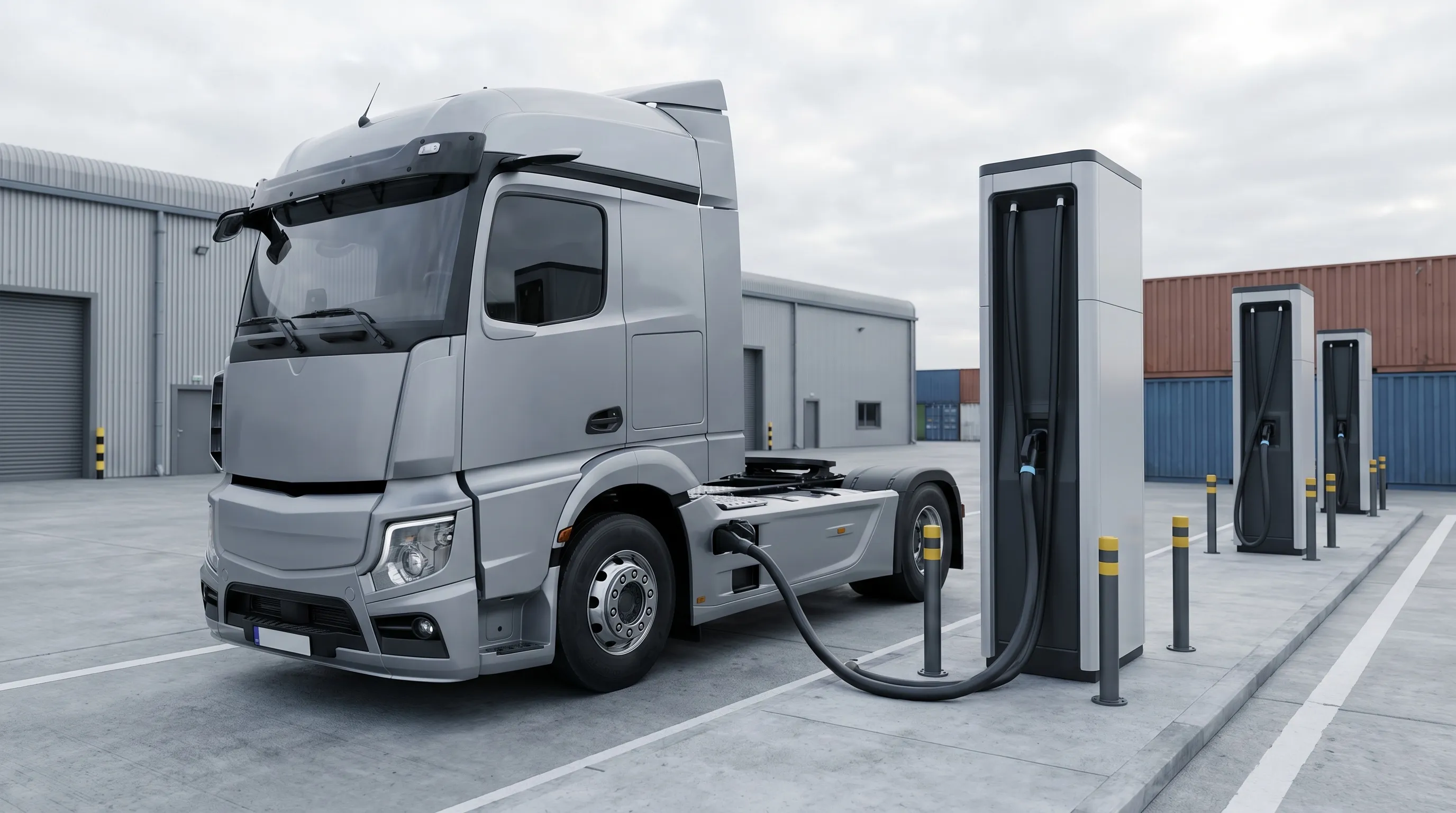
The first shipper RFP I saw that required an explicit percentage of electric miles landed in late 2024. By the first half of 2026, it’s no longer unusual — Fortune 500 corporates with public scope-3 emissions targets are routinely RFP-ing for either a percentage of electric truck miles on contracted lanes or, on specific high-visibility lanes, exclusively electric capacity. The brokers I’ve talked with running national books are seeing this in roughly 10% to 15% of new RFP cycles in markets where electric capacity actually exists.
This is no longer a 2030-era hypothetical. It’s an active operational question for any 3PL working with corporates that have set public emissions commitments. And it’s a question most brokers are not yet equipped to answer well.
The 2026 reality of electric truck capacity
The honest picture: electric truck capacity remains a small fraction of total freight miles. Single-digit percentage of the markets where it exists at all, and zero percentage in most markets. What’s available is concentrated in a recognizable set of operating patterns.
Drayage from major ports. Long Beach and Los Angeles together represent the most developed electric drayage market in North America, driven by California Air Resources Board requirements and the Port of Long Beach’s Clean Air Action Plan. Newark and the New York/New Jersey port complex have a smaller but real electric drayage capability. Savannah and Tacoma have early-stage electric drayage operators. The unifying pattern: short cycles, predictable routes, and access to depot-level charging at the carrier’s facility.
Regional lanes under 250 miles near electrification hubs. Where the carrier can complete a duty cycle without intermediate charging, electric capacity is operationally viable. Most of the production regional electric tractor capacity in 2026 — the Volvo VNR Electric, the Freightliner eCascadia, the Peterbilt 579EV — is operating in these patterns. Range under load, weight derating from battery mass, and charging access at one end of the lane are the constraints that define what’s workable.
Specific managed-fleet operations. A handful of national carriers — primarily large dedicated-fleet operators — have committed electric tractors to specific shipper accounts under multi-year contracts. PepsiCo’s Tesla Semi deployment is the highest-visibility example. These aren’t generally available to brokered freight.
What doesn’t exist at meaningful scale in 2026: long-haul over-the-road electric capacity. Despite vendor marketing, the production fleet running on long-haul lanes is negligible. Charging infrastructure on the interstate corridors — what the NEVI program was supposed to be delivering by now — is rolling out materially slower than originally projected. Meaningful long-haul electric capacity is still three to five years out by most operator estimates I’ve seen.
The broker’s actual role in electric capacity
The shipper isn’t directly contracting with the carrier on most lanes. The broker is the one finding electric capacity, vetting it, pricing it, and committing to it on the shipper’s behalf. This is an operational capability, not a sustainability talking point — and it’s where most brokers are underprepared.
Standard load boards in 2026 aren’t yet sorted by electric capability. DAT and Truckstop have begun adding equipment-type filters that include electric tractors, but the data quality is thin and inconsistent. The practical result: a broker trying to find electric capacity through load-board search alone will mostly fail, will sometimes find capacity that turns out to be misclassified, and will occasionally find genuine matches at no useful discount to the cost of building the capability properly.
The brokers who can actually deliver electric capacity on RFP commitments are doing something different. They’re maintaining a vetted carrier list with explicit electric capability documented: vehicle types, range under expected load, lane reach, charging access, expected cycle time relative to diesel. They’re tracking this list the way a specialized broker tracks reefer carriers or hazmat-qualified drivers — as a category of capacity that requires its own sourcing discipline.
The 2026 pricing reality
Electric capacity prices at a premium to comparable diesel capacity. The range I’ve seen in active 2026 RFPs and spot quotes is roughly 5% to 25% over comparable diesel, with a few patterns explaining where in that range a specific lane lands.
Drayage lanes from major ports tend to price at the lower end of the premium range, 5% to 15%, because the supply is most developed and the operating economics for the carrier are most established.
Regional lanes outside the developed electrification corridors tend to price at the higher end, 15% to 25%, because supply is genuinely tight and the carrier is often running the load at a longer cycle time than the diesel comparable.
Lanes requiring intermediate charging are usually quoted with explicit cycle-time premiums on top of the per-mile premium, because the driver is sitting at a charger for a stretch that doesn’t show up in the diesel comparable.
Spot rates against the DAT van linehaul benchmark — running roughly $2.00 per mile excluding fuel in early May 2026, up about 25% year-over-year — provide the reference point for the diesel comparable. The electric premium sits on top of that benchmark and reflects the supply tightness on top of the carrier’s operating-cost reality.
Shipper willingness to pay the premium
This is the variable that determines whether the broker should engage with the electric-RFP opportunity at all. The pattern I’ve seen consistently:
Fortune 500 corporates with public scope-3 commitments will pay the premium. They’ve internalized the cost as part of meeting their commitments and have budget allocated to it. The conversation is about delivering the capacity, not about justifying the cost.
Mid-market shippers with sustainability messaging but no specific commitments often won’t. They want the electric capacity on the RFP because it reads well in their sustainability report, but the budget doesn’t actually carry the premium when the bids come in. These RFPs frequently get re-scoped to remove or reduce the electric component when the costed proposals arrive.
Smaller shippers without specific commitments almost never will. They include electric capacity language because it’s a check-the-box item, but operationally they’re looking for the lowest-cost qualified carrier and will switch to a diesel quote if the cost gap is meaningful.
The broker’s job at the RFP-response stage is to know which category the shipper is in before committing operational resources to sourcing the electric capacity. The Fortune 500 with budget is the customer for whom building the capability is worth it. The smaller shipper looking to check the box isn’t, and engaging that RFP with full operational sourcing usually loses money even when the broker wins the lane.
The contract structure that actually works
Electric capacity contracts in 2026 generally carry contract terms distinct from standard diesel freight, and the brokers who’ve been doing this for a couple of cycles have started to standardize them.
Explicit fuel/charging surcharge mechanics separate from the standard fuel surcharge index. Diesel fuel surcharge mechanics indexed to DOE national average diesel prices don’t translate to electric operations. Electric capacity contracts typically use either a stated per-mile charging cost adjusted quarterly, or a pass-through of the carrier’s actual charging cost with documentation.
Equipment-availability terms acknowledging the lower fleet density. Standard diesel contracts assume the carrier can substitute equipment freely. Electric contracts often need explicit terms around what happens if the assigned electric tractor isn’t available — whether the broker accepts a diesel substitute (and if so, whether the shipper is informed), whether the load delays, or whether the contract terminates.
Cycle-time provisions acknowledging the operational reality. Electric lanes with intermediate charging typically take longer than the diesel comparable. The contract should set realistic transit-time expectations and protect both broker and carrier from penalty exposure on the time differential.
Multi-year volume commitments are increasingly part of these conversations. Carriers investing in electric fleet capacity need volume visibility to justify the capital expenditure, and brokers committing to deliver electric capacity benefit from carrier-side certainty. One-off lane awards rarely justify the operational investment on either side.
The operational investment the broker has to make
Building electric capacity-finding capability isn’t free. Done seriously, it requires:
- Carrier scoring discipline for electric capability — vehicle inventory, range capability, lane reach, charging access
- Lane-by-lane mapping of where electric capacity actually exists vs where it would need to be developed
- Contract templates with the surcharge, equipment, and cycle-time provisions that match the operating reality
- Dispatch and customer-service training to handle the differences in cycle time, equipment substitution, and shipper communication
This is operating cost that has to sit somewhere on the brokerage’s P&L. The cleanest place for it is in the working-capital line that funds operational investment generally, rather than absorbed out of operating margin on individual loads. Trade-aware funding programs for freight brokers typically have the flexibility to fund this kind of operational build, and the brokerages serious about electric as a long-term offering are funding the build deliberately rather than carving it out of margin.
The math on whether the electric capacity premium justifies the build: model the lane-by-lane premium needed to make the electric capacity profitable, compare it against the shipper’s stated willingness to pay, and run the breakeven against the operational cost of building the capability. The working-capital calculator for freight provides the framework for the lane-economic side of that math. Brokers running this analysis honestly before committing to electric-heavy RFP responses are making meaningfully better decisions than brokers committing first and modeling afterward.
The carrier-side dynamic
Drayage carriers near major ports investing in EV fleets are doing so partly on the back of broker commitments. The capital expenditure on an electric tractor is materially higher than the diesel comparable, and the carrier needs volume visibility to justify it. Multi-year volume guarantees are increasingly part of those carrier conversations, and the brokers who can offer that commitment structure are seeing preferred carrier relationships develop accordingly.
The reverse is also true. Carriers in the regional electric segment are reading the broker landscape carefully. The brokers who appear to be playing at electric capacity — accepting RFPs with electric requirements without the operational capability to deliver — are getting downgraded in carrier relationships. Carriers don’t want to bid against operators who won’t actually move the freight on the terms the shipper expects.
A practical 60-day framework
For a 3PL trying to decide whether to lean into electric capacity as a service offering or politely decline RFPs that demand it, a 60-day framework:
Days 1-15: assess the existing book. What percentage of current RFPs include electric capacity requirements? What percentage are coming from shippers with the willingness to pay the premium? What lanes do those RFPs cover, and does electric capacity actually exist on those lanes?
Days 16-30: estimate the build cost. What would it take to source, vet, and onboard a meaningful electric carrier list for the lanes that matter? What’s the operational cost — staff time, system changes, contract template development?
Days 31-45: model the economics. Per the framework above, what’s the per-lane premium needed to make this profitable, and does the shipper-willingness side of the market support it?
Days 46-60: decide and act. Either commit operationally — fund the build, develop the carrier list, formalize the contract templates — or decide to decline electric-required RFPs explicitly and focus on diesel capacity. The middle ground of accepting electric RFPs without the operational capability is the worst commercial position.
The 2026 watch
The federal EV truck incentive picture remains in flux post-administration change. Charging infrastructure rollout is materially slower than projected. Meaningful long-haul electric capacity is still three to five years out by most credible estimates.
Drayage and short-regional electric capacity, though, are operational realities now — not projections. The brokers building the capability to serve this segment well are positioning for a market that’s expanding, not declining, and they’re doing it during the period when the market is small enough to learn the operational details without being overwhelmed by volume.
The brokers waiting for the market to mature before engaging are going to find that the operational capability takes longer to build than they expect, and that the shippers paying the premium have already developed preferred relationships with the brokers who built the capability early.